


Market data for soursop in Brazil
100% pure soursop pulp, without additives, water or preservatives.
Here is the document content converted to formatted plain text (Markdown), maintaining the exact transcription and requested structure, including the table of contents.
COMMERCIAL SOURSOP GUIDE: FROM FIELD TO MARKET
Cultivation, Agroindustry and Access to Select Markets - 1st Edition, 2026
GB INDUSTRIAL LTDA WENCESLAU GUIMARÃES BAHIA BRAZIL
Table of Contents
- PUBLICATION DETAILS
- EXECUTIVE SUMMARY
- 1. INTRODUCTION AND MARKET CONTEXT
- 2. CULTIVATION CONDITIONS AND ZONING
- 3. SEEDLING PRODUCTION AND GENETIC MATERIAL
- 4. ORCHARD ESTABLISHMENT
- 5. NUTRITION, WATER AND PRUNING MANAGEMENT
- 6. POLLINATION: FLORAL BIOLOGY AND POLLINATING BEETLES
- 7. PESTS, DISEASES AND PHYTOSANITARY MANAGEMENT
- 8. PRODUCTION, PRODUCTIVITY AND CRITICAL FACTORS
- 9. HARVEST, POST-HARVEST AND INDUSTRIAL QUALITY
- 10. COMMERCIAL DESTINATIONS AND EXPORT MARKETS
- 11. QUALITY STANDARDS, TRACEABILITY AND CERTIFICATIONS
- 12. ECONOMIC VIABILITY AND STRATEGIC VISION
- 13. GIANT SOURSOP OF WENCESLAU GUIMARÃES: THE BAIXO SUL DA BAHIA CASE
- ANNEXES & REFERENCES
- FINAL CONSIDERATIONS
EXECUTIVE SUMMARY
This strategic technical guide was developed for rural producers, cooperatives and agroindustrial supply chain agents operating or planning to operate in commercial soursop (Annona muricata) cultivation for the pulp industry, the qualified domestic market and select export markets. The document brings together field-observed practices from Brazil, especially in the Northeast, with emphasis on the edaphoclimatic conditions of the São Francisco Valley and the Baixo Sul da Bahia, including Wenceslau Guimarães. It covers seedling production and orchard establishment through water management, nutrition, pollination, integrated pest management, harvest, post-harvest, industrial quality, traceability, processing and market access.
Brazilian soursop may present a competitive seasonal advantage in certain periods of the year, especially when there is complementarity with lower-supply windows in other producing countries. Capturing this value, however, requires professionalization: well-managed irrigation, individual fruit bagging when technically indicated, assisted pollination, phytosanitary control, field records, traceability and progressive adaptation to buyer requirements.
- LARGE-FRUIT POTENTIAL: Large fruits are reported in well-managed orchards in Baixo Sul da Bahia, especially with good soil, adequate moisture and careful management
- SEASONAL WINDOW: Brazilian soursop may offer supply during periods of lower availability from other producing countries
- GROWING MARKET: The international market for soursop and derivatives is expanding in beverages, pulps, food service and natural ingredients
- TARGET AUDIENCE: Rural producers, cooperatives, fruit chain entrepreneurs and processing industry
The economic, regulatory and logistical parameters presented here do not constitute a promise of results. They are references that must be validated case by case, considering region, variety, management, target market, buyer, infrastructure and applicable legislation.
1. INTRODUCTION AND MARKET CONTEXT
1.1 WHY INVEST IN SOURSOP?
Soursop (Annona muricata L.) has been gaining ground as a high-value-added tropical fruit in the trade of pulps, fruit preparations, beverages, food service and derivatives. Native to tropical America, it found favorable adaptation conditions in Northeast Brazil, especially in regions combining heat, suitable soils, water availability and productive tradition. Brazil has areas with competitive potential for supplying select markets, provided production is conducted with technical standards, traceability and supply regularity. Soursop is a promising crop, but should not be treated as a simple one. Final quality depends on the seedling, soil, water, pollination, sanitation, harvest timing and the speed between field and processing.
1.2 OPPORTUNITY FOR THE NORTHEAST
Northeast Brazil - especially Bahia, Pernambuco, Ceará and irrigated or humid regions with fruit-growing aptitude - can explore important supply windows. In areas such as the São Francisco Valley and Baixo Sul da Bahia, there is a combination of productive experience, favorable climate and relative proximity to logistics infrastructure. The opportunity, however, is not just about producing volume. The differentiator lies in producing fruit with a repeatable standard: known origin, correct harvest timing, absence of internal pests, lower post-harvest losses and alignment with buyer requirements. More demanding markets value predictability, documentation and the ability to repeat.
2. CULTIVATION CONDITIONS AND ZONING
2.1 CLIMATE & GEOGRAPHIC STRATEGY
Soursop develops best in a hot and humid climate, with average temperatures between 25°C and 30°C. Below 15°C, vegetative growth tends to slow; frost can cause significant damage. Above 38°C for prolonged periods, there may be increased risk of floral abortion, young fruit drop and water stress. Regions with good luminosity, adequate humidity and absence of intense cold favor the crop. In the irrigated semi-arid region, the combination of solar radiation and water control can support harvest planning. In Baixo Sul da Bahia, regular rainfall, relative humidity and deeper soils favor vegetative development and the formation of larger fruits.
2.2 SOIL & PREPARATION
The species prefers deep, fertile, well-drained soils with pH between 5.5 and 6.5. Sandy soils can be used provided they receive organic matter correction and adequate water and nutrient management. Clay soils require special attention to drainage, as waterlogging favors root rots. Soil preparation should include chemical analysis, acidity correction, organic matter incorporation and drainage planning when necessary.
2.3 WATER AND IRRIGATION
Soursop responds well to regular water supply. In regions with insufficient or poorly distributed rainfall, irrigation is decisive for commercial production. Drip systems are recommended for water use efficiency, fertigation capability and reduced canopy wetting.
PhaseIndicative Weekly Water DepthOrchard establishment~15 to 25 mm/week (adjust for soil and climate)Full production~40 to 60 mm/week (special attention at flowering and fruit fill)
These values are indicative. Correct management must consider soil type, evapotranspiration, plant age, phenological stage, irrigation system and moisture monitoring. Controlled irrigation reduction before flowering can be used as a phenological strategy in some systems, but must be conducted with technical assistance. Excessive deficit compromises flowering, fruit set and fruit size.
3. SEEDLING PRODUCTION AND GENETIC MATERIAL
Seedling quality is one of the most important factors for orchard success. Poorly formed, contaminated or genetically heterogeneous seedlings compromise productivity, uniformity and the productive lifespan of the area. For commercial production, the use of grafted seedlings or selected materials from reputable nurseries is recommended whenever available.
3.1 AVAILABLE GENETIC MATERIAL
The choice of genetic material should consider:
- Regional adaptation and productive history
- Pulp yield and sensory quality
- Pulp firmness (important for transport and processing); Tolerance to pests and diseases
- Plant size and average fruit weight compatible with target market
Avoid citing specific cultivars without confirmed technical availability. When interested in a specific clone or selection, confirm origin, registration, sanitation, productivity and regional recommendation with a nursery, technical assistance or research institution. Seed-propagated seedlings should be restricted to rootstock production - not recommended as the basis for commercial orchards.
3.2 PROPAGATION TECHNIQUES
Grafting is an important technique for greater uniformity in commercial orchards. Patch budding and other grafting methods can be used according to nursery standards and rootstock conditions. The ideal rootstock age varies according to vigor, stem diameter and nursery conditions - work with seedlings showing adequate diameter, sanitation and good root system. The source plant (matrix) should be selected from healthy, productive plants with well-formed fruits, good pulp-to-seed ratio, adequate Brix and a history of regularity. Purchasing seedlings from licensed nurseries reduces contamination risks and increases orchard predictability.
4. ORCHARD ESTABLISHMENT
4.1 SPACING AND TRAINING SYSTEMS
SystemSpacingPlants/haNotesTraditional6m x 6m~277Favors aeration, manual harvesting and greater orchard longevityIntensive6m x 4m~416May increase initial productivity; requires more rigorous pruning and canopy controlHigh densityVarious>800Only with technical planning, irrigation, nutrition and well-structured pruning; may increase cost and reduce orchard lifespan if poorly managed
4.2 SOIL PREPARATION AND PLANTING
- SOIL ANALYSIS & CORRECTION: Perform soil analysis and acidity correction months before planting. Plan drainage and define irrigation system.
- PIT PREPARATION: Open pits of approximately 60x60x60 cm. Add well-composted organic matter and phosphorus according to soil recommendation. Exact quantities should be defined by agronomic analysis and guidance.
- PLANTING: Plant at the beginning of the rainy season or when the irrigation system is operational. Apply immediate irrigation after planting and mulching (straw, organic material) to reduce evaporation, protect soil and improve biological activity.
5. NUTRITION, WATER AND PRUNING MANAGEMENT
5.1 IRRIGATION & PHENOLOGICAL STRATEGIES
- ORCHARD FORMATION: Focus on rooting, balanced growth and canopy structure formation.
- INDUCTION & FLOWERING: Avoid excessive stress; deficit management should only be applied with technical criteria.
- FRUITING & FRUIT FILL: Maintain stable moisture to favor growth, quality and prevent cracking.
- PRE-HARVEST: Avoid abrupt water fluctuations, which can affect firmness, cracking and final quality.
Monitoring with tensiometers, moisture probes or technical soil assessment improves decision-making and reduces waste.
5.2 FERTILIZATION & FERTIGATION
Soursop requires balanced nutrition. Potassium has an important relationship with fruit size, firmness and pulp quality. Nitrogen must be managed carefully, as excess can stimulate vegetative growth at the expense of flowers and fruits. General references for plants in full production (always adjusted by soil, leaf and productivity analysis):
- Nitrogen: approximately 300-400 g/plant/year
- Potassium: approximately 400-600 g/plant/year
- Phosphorus: approximately 150-200 g/plant/year
- Calcium, boron, zinc and other micronutrients: relevant at flowering, fruit set and skin quality.
These values do not replace agronomic recommendation. Fertigation allows fractionation and better utilization, but requires control to avoid salinization, nutritional imbalance or waste.
5.3 PRUNING
- Formation: conduct to facilitate light entry, ventilation, harvesting and fruit support generally 3-4 well-distributed main branches
- Production: remove dry, diseased, crossed or poorly positioned branches after harvest; control height for management
- Sanitary (continuous): branches with disease symptoms must be removed from the orchard and properly disposed of - never left as a source of inoculum
6. POLLINATION: FLORAL BIOLOGY AND POLLINATING BEETLES
6.1 THE SOURSOP FLOWER & ITS REPRODUCTIVE STRATEGY
The soursop flower is hermaphrodite and presents protogynous dichogamy the female phase occurs before the male phase. This mechanism reduces spontaneous self-pollination and favors cross-pollination. Anthesis generally occurs at dusk or during the night and can extend for more than one day. The flower emits a characteristic scent and attracts pollinating insects, especially beetles associated with Annonaceae.
6.2 CYCLOCEPHALINI BEETLES: SPECIALIZED POLLINATORS
Beetles of the tribe Cyclocephalini (family Scarabaeidae) are recognized as important pollinators of Annonaceae in different regions. These scarabaeid beetles enter the floral chamber, move between reproductive structures, transport pollen adhered to their bodies and can contribute to fruit set. Maintaining native vegetation, reducing indiscriminate insecticide applications and ecological management of the surrounding area favor natural pollinator populations.
6.3 POLLINATION MANAGEMENT IN THE ORCHARD
In commercial orchards, natural pollination may be insufficient. Manual pollination is a high-impact practice, especially in areas with low pollinator presence or when greater production uniformity is sought.
BASIC PROTOCOL:
- Identify flowers in female phase: moist, viscous and receptive stigma
- Collect pollen from flowers in male phase: open anthers, dry and loose pollen
- Transfer pollen gently to the stigma with a soft brush
- Perform the operation preferably in the late afternoon or early evening, according to local floral behavior
Well-executed manual pollination can significantly increase fruit set. The magnitude of the gain varies according to management, climate, genetic material and presence of natural pollinators. Understanding and intervening in the pollination cycle is essential to maximize commercial productivity of the soursop orchard.
- FEMALE PHASE: Receptive stigma first 24-48h after anthesis
- BEETLE VISIT OR MANUAL POLLINATION: Pollen transfer to receptive stigma
- FRUIT SET: Development and fruit formation
7. PESTS, DISEASES AND PHYTOSANITARY MANAGEMENT
7.1 MAIN PESTS & INTEGRATED MANAGEMENT
- SOURSOP BORER (CERCONOTA ANONELLA): One of the most relevant pests. The larva bores young fruits, causing drop, internal deformation, quality loss and industrial devaluation. Integrated management may include: regular monitoring trap inspection; removal of attacked fruits; individual fruit bagging when technically indicated; use of registered products with technical guidance; preference for low-toxicity strategies with minimal impact on natural enemies.
- FRUIT FLY (ANASTREPHA SPP.): Relevant for direct damage and quarantine importance in specific markets. For fresh fruit, export requirements depend on destination country, pest status, approved protocol, official treatment and phytosanitary certification. Requirements must be confirmed case by case with competent authorities and official regulatory bases of the importing country.
- APHIDS, SCALE INSECTS & OTHER SUCKING INSECTS: Can reduce vigor, favor sooty mold and act as disease vectors. Management should prioritize monitoring, biological balance and localized application of registered products only when necessary.
7.2 MAIN DISEASES & PREVENTION
DiseaseAgentPreventionAnthracnoseColletotrichum spp.Pruning for aeration, removal of infected material, reduced canopy wetting, bagging when applicable, responsible use of registered fungicides with alternating modes of actionRoot RotPhytophthora spp. and othersAdequate drainage, area selection, irrigation management, balanced organic matter, healthy seedlings
Core phytosanitary principle: prevention is cheaper and more efficient than trying to recover already compromised fruit.
- GLOBALG.A.P.: Private international standard for good agricultural practices, frequently requested by retailers, distributors and structured buyers. Not a universal legal requirement treat as a commercial differentiator or buyer-specific requirement.
- FOOD SAFETY SYSTEMS: Good Manufacturing Practices, HACCP-based procedures, traceability, operational controls and food safety system implementation according to the company's real stage.
- ORGANIC STANDARDS: Organic certification may open higher-value channels, but requires conversion period, audits and compliance with destination country norms. Price premium is not guaranteed.
- TRACEABILITY: Field-to-market documentation: seedling origin, pest management applied, harvest date, lot identification and processing records.
8. PRODUCTION, PRODUCTIVITY AND CRITICAL FACTORS
8.1 CYCLE AND YIELD EXPECTATIONS
With quality seedlings and adequate management, soursop may begin flowering between 18 and 24 months, with first commercial harvest normally between 2.5 and 3 years. Full production tends to occur from the fifth year, varying according to genetic material, irrigation, nutrition, climate and management.
- 18-24 MONTHS: First flowering
- 2.5-3 YEARS: First commercial harvest
- YEAR 3: Indicative: 4 to 8 t/ha
- YEAR 4: Indicative: 11 to 17 t/ha
- YEAR 5 : Indicative: 22 to 42 t/ha in well-managed systems
These figures are not productivity guarantees. They represent reference ranges that depend on technical management, sanitation, pollination, orchard age, planting density and climatic conditions.
8.2 CRITICAL SUCCESS FACTORS
- WATER UNIFORMITY: Deficit or excess impairs size, Brix, fruit set and sanitation
- POLLINATION: Low pollination drastically reduces fruit set
- BORER CONTROL: Internal attacks compromise industry and export
- POTASSIUM & NUTRITIONAL BALANCE: Influences size, firmness and pulp quality
- CORRECT HARVEST TIMING: Early harvest produces low-quality fruit; late harvest causes softening and industrial loss
- FAST POST-HARVEST: The longer the interval between harvest and processing, the greater the risk of losses
9. HARVEST, POST-HARVEST AND INDUSTRIAL QUALITY
9.1 HARVEST POINT & FIELD MANAGEMENT
For pulp processing, the fruit must be harvested at a physiologically adequate stage, when it shows complete development, firmness, light green or slightly whitish skin and less rigid spines, according to variety and region.
PRACTICAL INDICATORS: Full and well-developed fruit. Firm to the touch. Less rigid spines. Lighter coloration. Absence of spontaneous drop. Absence of mechanical damage, borer or rot.
For the fresh market, the harvest point can be adjusted according to distance, logistics and buyer requirements. In all cases, harvest must avoid dropping, impacts and sun exposure. Use clean pruning shears, maintain a small peduncle and handle carefully.
9.2 PROCESSING & INDUSTRIAL STANDARDS
The pulp industry seeks healthy, clean fruit, ripe at the correct point and with good yield. Common parameters include minimum pulp yield, compatible Brix, absence of fermentation, absence of internal pests and texture adequate for processing. Basic industrial flow: reception and raw material inspection → selection and discard of unsuitable fruits → washing and sanitization → peeling and pulping → seed removal → refining when applicable → packaging → freezing cold storage cold chain dispatch.
9.3 KEY PARAMETERS FOR INDUSTRIAL SUPPLY
ParameterReferencePulp yieldDesirably above 60%, according to material and ripenessSoluble solids (Brix)Common reference from 12°Brix; more demanding segments may request higher rangesFirmnessSufficient for handling and processing without excessive disintegrationSanitationAbsence of borer, fermentation, rots and severe damageHarvest-to-processing timeIdeally short; the shorter the interval, the greater quality preservationTraceabilityOrigin identification, lot, harvest date and supplier
Industrial quality does not depend only on fruit size. A smaller, firm, healthy fruit with good Brix may have more value than a giant fruit that is soft, fermented or with internal damage.
10. COMMERCIAL DESTINATIONS AND EXPORT MARKETS
In Brazil, soursop is marketed mainly as fresh fruit in regional markets and as frozen pulp for juices, food service, ice cream shops, restaurants, beverage industries and institutional programs. Demand can be seasonal and vary according to region, price, supply and quality.
10.1 DOMESTIC VALUE CHAIN
Possible channels: Ceasas and wholesalers; regional retail; pulp processors; beverage and dessert industries; food service; cooperatives and associations; institutional buyers when applicable.
10.2 PROCESSING INDUSTRY PARTNERSHIPS
Processors seek suppliers capable of delivering regularity, quality, fiscal documentation and ripeness standard. Points valued: staggered supply; fruit harvested at correct point; absence of internal pests; minimum standardization; advance volume communication; documentation and traceability; organized logistics.
10.3 EXPORT: MARKETS AND REQUIREMENTS
- UNITED STATES: Relevant market for tropical ingredients, ethnic consumption, food service and functional products. Requirements vary according to product form, buyer and channel. Fresh fruit phytosanitary requirements must be confirmed with USDA/APHIS and competent authorities.
- EUROPEAN UNION: Demanding market for traceability, food safety, documentation and private buyer standards. For retail and larger distributors, private certifications such as Global.G.A.P. may be requested.
- ASIA (JAPAN/SOUTH KOREA): Selective and rigorous market with high quality, regularity, documentation and logistics requirements.
- MIDDLE EAST: Opportunity for pulps, beverages, nectars and ingredients, with possible Halal requirement depending on buyer and application.
10.4 INTERNATIONAL MARKET OVERVIEW
The international market for soursop and derivatives is still niche-oriented, but gaining visibility in beverages, pulps, preparations, food service and natural ingredients. Market figures should be treated as estimates, as public data may group different products, categories or tariff codes. Market reports and commercial databases may indicate growth, but values vary according to methodology, product, country and source. Brazil's opportunity lies in moving away from informal raw material logic and advancing toward industrial pulp standards with traceability, cold chain, documentation, Good Manufacturing Practices, operational controls and clear specifications.
11. QUALITY STANDARDS, TRACEABILITY AND CERTIFICATIONS
11.1 WHAT THE MARKET TYPICALLY REQUIRES
Select markets typically observe: Healthy fruit, without internal pests; Compatible pulp yield; Adequate Brix; Absence of fermentation; Correct ripeness; Traceable origin; Supply regularity; Commercial and sanitary documentation according to market; Technical data sheet and product specifications when processing is involved.
For frozen pulp, industrial buyers may request parameters such as Brix, pH, acidity, total solids, absence of foreign matter, microbiological standards, packaging, storage temperature and shelf life.
11.2 TRACEABILITY & GOOD PRACTICES
Traceability must allow identification of fruit origin, producer, area, harvest date, lot, processing and destination. Basic field records include: seedling origin; pesticide and fertilizer applications; pest monitoring; harvest; volume delivered; lot identification. Good agricultural practices and good manufacturing practices reduce risk, improve consistency and increase buyer confidence.
11.3 VALUE-ADDING CERTIFICATIONS
- GLOBALG.A.P.: Private international standard for good agricultural practices, frequently requested by retailers, distributors and structured buyers. Not a universal legal requirement - treat as a commercial differentiator or buyer-specific requirement. Validate demand, cost, timeline and likely return before investing.
- ORGANIC (USDA/EU/JAS): May open higher-value channels, but requires conversion period, audits and compliance with destination country norms. Price premium is not guaranteed and varies according to market, product, supply and buyer.
- FAIR TRADE: May be relevant for producing communities, cooperatives and chains with social appeal. Depends on auditing, governance and specific requirements.
- RAINFOREST ALLIANCE & SOCIO-ENVIRONMENTAL STANDARDS: Can add value in chains that value sustainability, good working conditions, environmental conservation and rural governance.
Core principle: certification only generates value when there is a buyer market willing to recognize it. Before investing, validate demand, cost, timeline and likely return.
12. ECONOMIC VIABILITY AND STRATEGIC VISION
12.1 INVESTMENT AND RETURN: REFERENCE MODEL
The economic viability of soursop depends on productivity, price, implementation cost, irrigation, labor, losses, market access, logistics distance and quality standard. In irrigated medium-technology systems, initial investment may include: soil preparation; initial correction and fertilization; seedlings; irrigation; staking and protection; inputs; labor; minimum post-harvest structure; logistics. Investment references per hectare should be treated as regional estimates, not as rules. Payback may occur in a few years when management, productivity and market are favorable, but should not be presented as a guarantee.
USEFUL PERFORMANCE INDICATORS:
- Productivity per hectare
- Operational cost per kg produced
- Percentage of usable fruit
- Loss from pest/disease
- Post-harvest loss
- Pulp yield
- Average price per channel
- Purchase regularity
- Net margin after logistics and processing
12.2 MARKET STRATEGY
The modern producer must abandon the logic of producing first and looking for a buyer afterwards. The safest path is reverse planning:
- Define Target Market: Understand desired specification before planting
- Implement with Technical Standards: Record management from day one
- Choose Adequate Genetic Material: Align variety with market requirements
- Build Relationships Early: Connect with processors or buyers before full production
- Consolidate Through Cooperation: Small producers gain strength through associations, cooperatives, joint purchasing and organized sales
Soursop requires a minimum scale of regularity to serve industry and export professionally. Cooperation is not optional - it is strategic.
13. GIANT SOURSOP OF WENCESLAU GUIMARÃES: THE BAIXO SUL DA BAHIA CASE
13.1 A REGION, A PHENOMENON
In Baixo Sul da Bahia, especially in Wenceslau Guimarães and neighboring municipalities, soursop can reach dimensions above the average observed in many producing regions. Large fruits are reported by local producers, especially in orchards with good soil, adequate moisture, regional genetics and careful management. This phenomenon should not be treated merely as a curiosity. For industry, larger fruits can generate greater absolute pulp yield and greater operational efficiency, provided they maintain firmness, sanitation and sensory quality.
13.2 WHY THE FRUITS GROW SO LARGE
- Deep and fertile soils with good water retention
- Favorable rainfall and humidity
- Lower water stress during critical phases
- Locally adapted selections
- Practical knowledge accumulated by producers
- Well-conducted nutritional management and pruning
Regional genetics, often called 'crioula' or 'nordestina' in field language, should be treated with technical prudence. Before formalizing as a variety, cultivar or clone, it is necessary to confirm nomenclature, origin and agronomic characterization.
13.3 FROM FIELD TO INDUSTRY: REAL OPPORTUNITY
Large fruits require specific management:
- Branch support
- Well-executed formation pruning
- Careful harvesting with trained team
- Adequate boxes and shorter harvest-to-processing time; Rigorous ripeness assessment
13.4 THE RECORD AND WHAT IT REPRESENTS
Records of very large fruits show the maximum potential of the species under favorable conditions, but do not represent the productive average. They should be used as a demonstration of regional potential, not as a commercial promise. Size attracts attention, but quality, traceability and regularity sustain the business. The challenge of Baixo Sul is to transform natural potential into a consistent productive standard.
ANNEXES & REFERENCES
ANNEX A-MOST COMMON ERRORS IN IMPLEMENTATION AND MANAGEMENT
ErrorConsequenceUsing seed-propagated seedlings in commercial orchardIncreases variability, irregularity and productive delayIgnoring drainageFavors root rot and plant deathExcess nitrogen during fruitingStimulates vegetation and may reduce fruit qualityLate harvestingGenerates softening, fermentation and loss of industrial valueLack of bagging when indicatedIncreases risk of borer and fruit flyAbsence of field recordsHinders traceability and negotiation with demanding buyersProducing without a target marketIncreases commercial risk and margin loss
ANNEX B-COMMERCIAL PRODUCER CHECKLIST
- Soil analysis completed
- Acidity correction planned
- Irrigation system sized
- Seedling source defined and documented
- Drainage assessed
- Target market defined
- Processor, cooperative or potential buyer mapped
- Phytosanitary schedule prepared
- Harvest and post-harvest plan defined
- Basic field records organized
- CAR active and rural documentation regularized when applicable
ANNEX C-TECHNICAL PRUDENCE NOTE
The economic, regulatory and logistical parameters presented in this guide are general references. They may vary significantly according to producing region, harvest, buyer, applicable legislation, product form, destination country, transport, packaging, scale, certifications and processing structure. Before any commercial implementation or export operation, consult local technical assistance, agronomist, agroindustrial technical manager, customs broker, foreign trade agent and competent sanitary defense agencies.
REFERENCES & ACKNOWLEDGEMENTS
- EMBRAPA. Soursop Production System. Embrapa Cerrados.
- FAO. FAOSTAT - Trade Statistics. Food and Agriculture Organization of the United Nations.
- ITC-International Trade Centre. Trade Map - indicative commercial data by country and product. GLOBALG.A.P.
- Integrated Farm Assurance for Fruit and Vegetables - private international standard. USDA/APHIS.
- Agricultural Commodity Import Requirements (ACIR) - official base for US plant import requirements.
- EU Regulation (EC) No 852/2004 on the hygiene of foodstuffs HACCP-based procedures.
- Technical literature on Annonaceae, Cyclocephalini beetle pollination, soursop pest and disease management, post-harvest and tropical fruit processing.
Acknowledgements: To the producers of Baixo Sul da Bahia and other producing regions, whose practical experience forms the real foundation of soursop cultivation development. To the GB Industrial team, in Wenceslau Guimarães, for the work of integrating field, agroindustry and market. To research, technical assistance and agricultural defense institutions that contribute to advancing knowledge on Annonaceae in Brazil.
FINAL CONSIDERATIONS
Commercial soursop production is not only a matter of planting trees. It is a technical chain that requires planning, quality seedlings, well-prepared soil, balanced irrigation, efficient pollination, phytosanitary management, correct harvest timing, fast post-harvest handling, safe processing and organized relationships with buyers.
Brazil's potential, especially in the Northeast, is real. But this potential only becomes value when there is professionalization. Select markets do not buy only fruit; they buy regularity, origin, traceability, quality and trust.
For producers, cooperatives and agroindustrial partners, the opportunity is to build a more integrated chain, where field and industry speak the same technical language. For GB Industrial, this is the path: strengthening the production base, raising standards, reducing losses and connecting Brazilian soursop to qualified markets.
From Bahia to the world, soursop must be treated with discipline, prudence and long-term vision. The future of the chain will be built by those who combine well-managed production, food safety, industrial consistency and serious market relationships.
GB Industrial Ltda. Rodovia BR-101, Km 356, Bairro Sarilândia - Wenceslau Guimarães - BA, CEP 45460-000 | 55 73 99937-8630 - jaime@gravioladabahia.com.br - www.gravioladabahia.com.br
Learn more about our company.
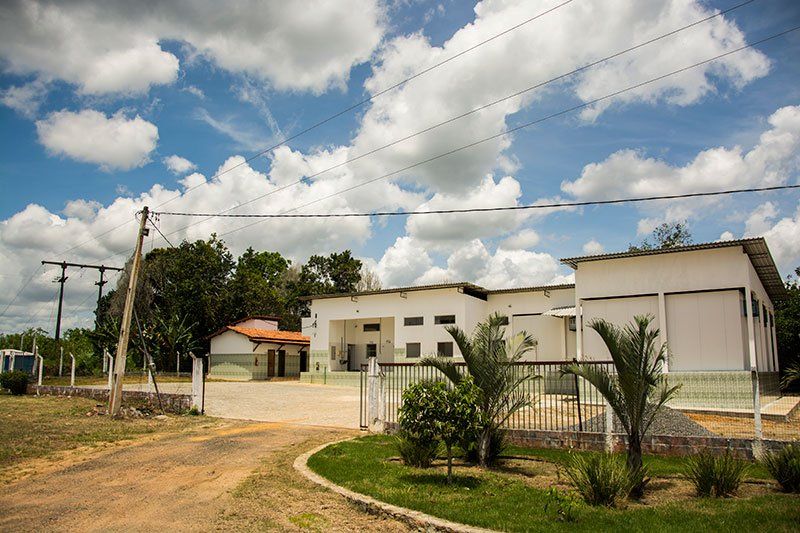
World leader in soursop production
The southern region of Bahia is a world leader in soursop production. The perfect climate for the species and increasing mechanization allow for the development of fruits with high Brix content and balanced pH for the production of pulp, juice, ice cream, and yogurt. The production of large volumes with quality and regularity guarantees the maintenance of your product on the market year-round. In addition to soursop, we process cupuaçu, cajá, and cocoa, and we serve companies that need processing of other fruits found in the region, such as acerola, pineapple, and passion fruit, which can be processed with the same level of quality and in compliance with the standards of the Ministry of Agriculture.
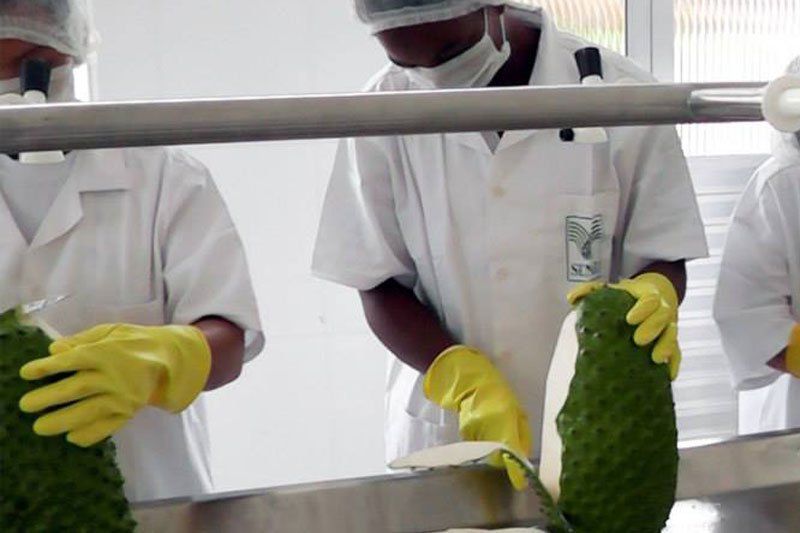
OUR COMMITMENT TO QUALITY
Graviola da Bahia is committed to providing only high-quality raw materials. We work exclusively with selected fruits supplied by people who also share the desire and determination to do their best. We abhor the superficial thinking, prevalent in parts of the raw materials market, that, for example, it is only possible to pulp fruits if water, sugar, and preservatives are added. Here, we sell only pure fruit.
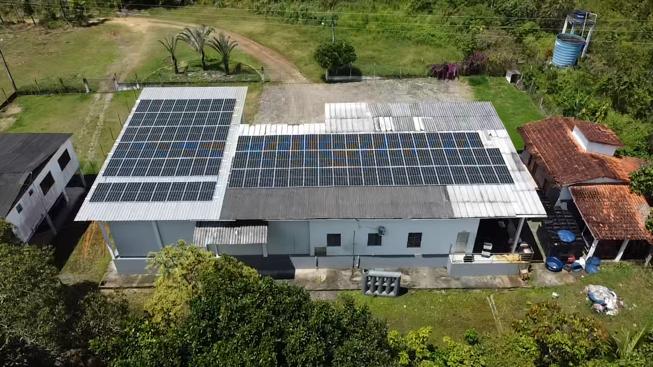
Concern about environmental impact
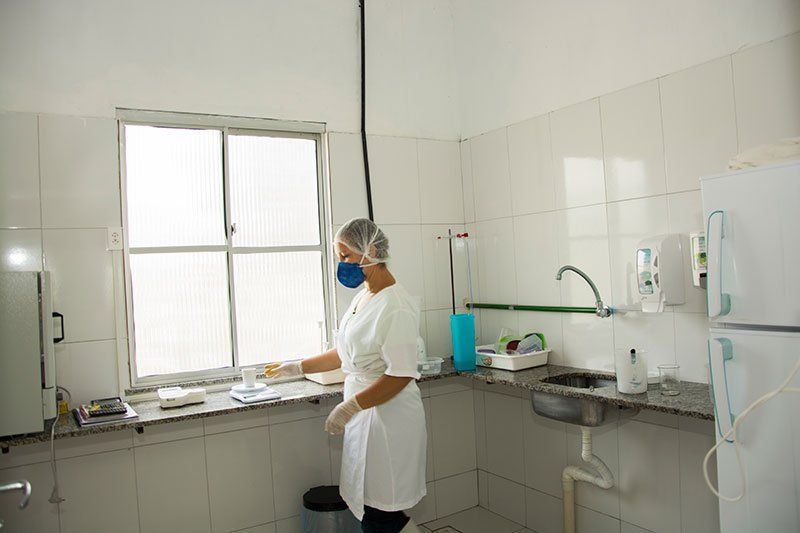
SOCIAL RESPONSIBILITY
Graviola da Bahia focuses on integrating small producers, offering technical training and environmental awareness that results in improved educational levels and a consequent increase in quality of life, through the appreciation of their production.

Assurance of technical quality