Products
Soursop (Graviola) Puree for Industry
Our flagship product: large-scale soursop puree and pulp, year-round.
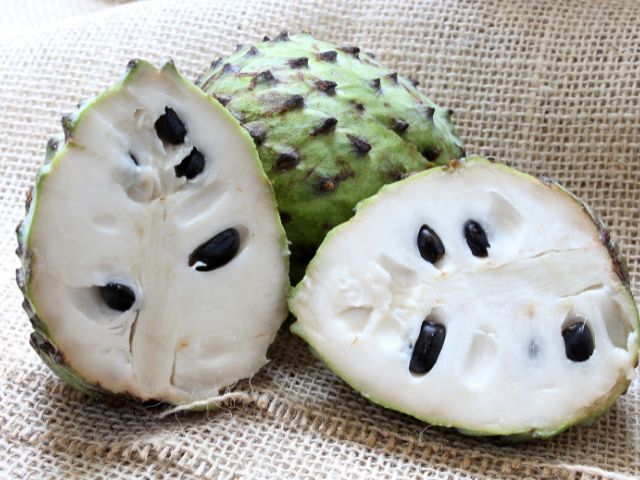
Annona muricata
Origin and fruit profile
White, juicy, aromatic pulp with a sweet flavor and light acidity. Fruit from our region easily reaches 8 to 10 kg, nearly triple the average weight in other growing regions.
Growing region: Wenceslau Guimarães, in Bahia's Baixo Sul region — today the world's largest soursop-growing hub.
Harvest season: Peak harvest runs from June to August, but well-managed orchards in southern Bahia produce fruit almost year-round.
Industrial applications
Food
Juices, nectars, ice cream, popsicles, jams and desserts. Frozen puree simplifies transport and storage for export.
Pharmaceutical & Herbal
Production of teas, capsules and natural supplements from the fruit, leaves and seeds.
Cosmetics
Creams, soaps, shampoos and scrubs, drawing on the fruit's antioxidant properties and tropical aroma.
Agro-industrial
Seed oil used as a natural pesticide; leaf and peel extracts for organic farming.
Frequently asked questions
Where does soursop come from?
Soursop (Annona muricata) originates from tropical regions of the Americas, including the Caribbean and Central America, and is now widely grown throughout Brazil.
How is soursop puree produced?
Ripe fruit undergoes selection, washing, peeling, extraction and sieving, followed by packing and immediate freezing under controlled temperature.
How long does frozen soursop puree last?
Stored at -18°C, the average shelf life is 12 months, preserving flavor and nutritional value.
What are the main markets for soursop?
We supply industries in Brazil and abroad, with particular recognition in Europe — especially Germany — for the fruit's and its leaves' properties.
You may also like